
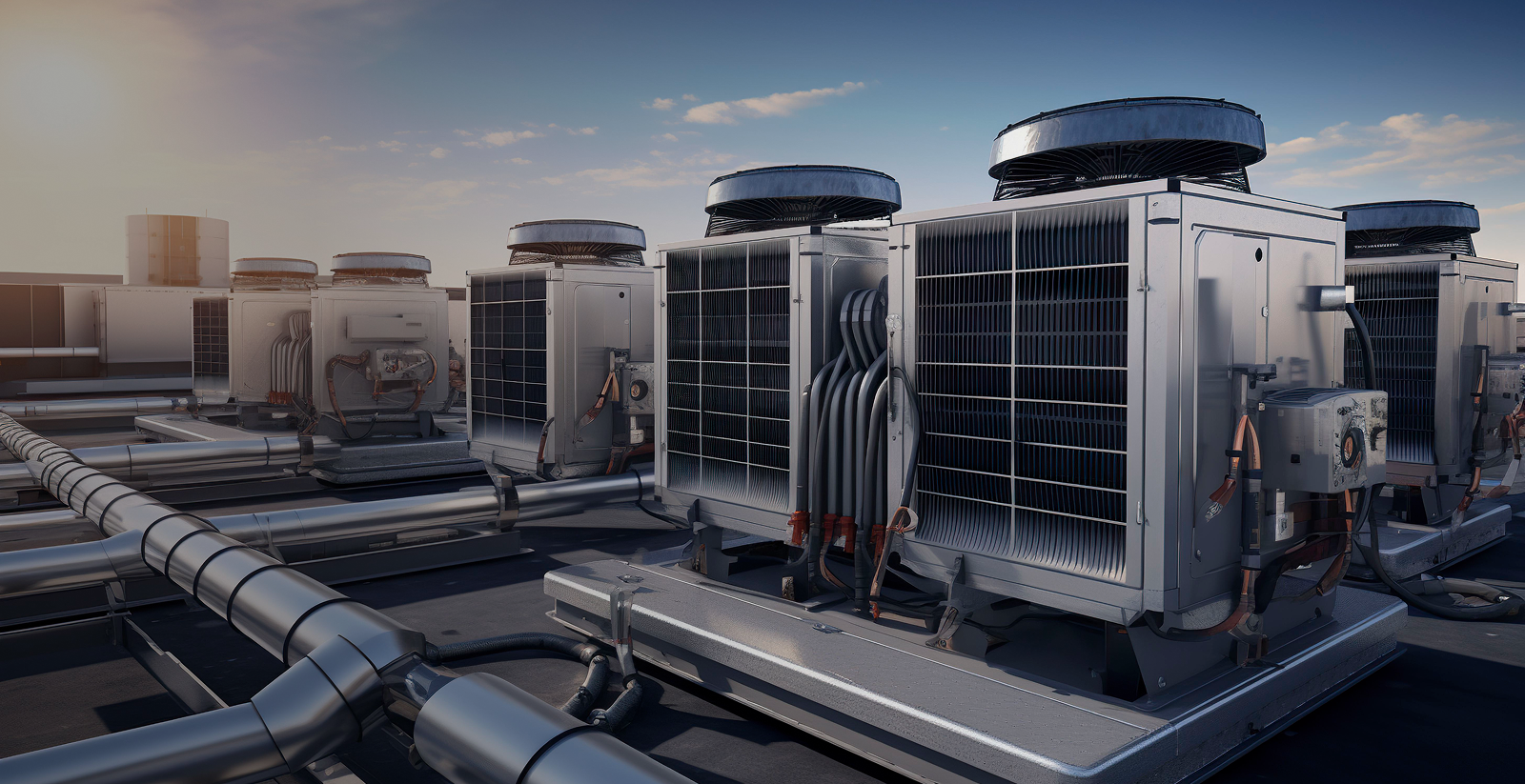
Across the Gulf, extreme heat is not only a seasonal discomfort; it is a serious operational challenge for buildings. When outdoor temperatures rise sharply, air-cooled chillers work harder, electrical consumption increases, cooling capacity drops, and critical facilities face higher risk of discomfort, equipment strain, and unplanned downtime.
For commercial buildings, hotels, hospitals, and education campuses, the impact is visible in more than just utility bills. It affects guest experience, patient safety, classroom productivity, asset life, maintenance budgets, and sustainability performance. In a region where cooling demand remains high for long periods of the year, facility owners need smarter ways to protect cooling performance without depending only on major equipment replacement.
Air-cooled chillers depend on outdoor air to reject heat. During peak Gulf summer conditions, the air reaching the condenser coils is already extremely hot. This forces the compressor to work harder to maintain the required cooling output. As a result, the chiller consumes more electricity, cooling capacity reduces, and the risk of overheating or tripping increases.
The GACS™ Adiabatic Cooling System is designed as a pre-cooler for standard air-cooled chillers. It reduces the temperature of the incoming air before it reaches the condenser coils, helping improve chiller efficiency. The system supports up to 35% reduction in chiller electrical consumption and up to 40% increase in cooling capacity, while also protecting condenser coils from dust, rust, calcium, mineral deposits, and direct sunlight.
Hotels and resorts operate around comfort. Guest rooms, lobbies, restaurants, kitchens, banquet halls, spas, and back-of-house areas all depend on stable cooling. During peak check-in hours, busy dining periods, or full banquet operations, the cooling load can rise very quickly.
When chillers struggle during extreme heat, the guest experience is affected immediately. Warm rooms, uncomfortable lobbies, poor dining comfort, and inconsistent cooling can influence reviews, repeat business, and brand perception. At the same time, the hotel’s utility cost rises because the chiller plant is running harder for longer hours.
Adiabatic pre-cooling helps hotels reduce this pressure by lowering the intake air temperature reaching the condenser coil. This allows the compressor to work against a cooler thermal load, reducing kWh draw and stretching available cooling capacity during peak hotel operations. Importantly, the retrofit can be planned around live hotel operations, with installation phased chiller by chiller during low-load windows to avoid disruption to guest floors, kitchens, and banquet areas.
In healthcare, cooling is not simply about comfort. Hospitals, clinics, operating areas, wards, consultation rooms, and diagnostic spaces require reliable indoor environments around the clock. Rising ambient temperatures increase the load on air-cooled chiller plants, while clinical areas depend on stable conditions for patient care and operational continuity.
If chiller performance drops during extreme heat, hospitals face higher operating costs, increased strain on aging plant, and greater risk of system stress during periods when uptime is critical. The healthcare content highlights that hospitals and diagnostic centres run continuously, and that rising ambient temperatures across Dubai, Abu Dhabi, and Sharjah amplify condenser loads. Efficient chiller performance and compliant lighting help reduce operating expenses without compromising hygiene, comfort, or clinical uptime.
For hospitals, optimization should focus on reliability first. A GACS™ retrofit can improve chiller performance without modifying the chiller’s refrigerant circuit. The system is installed externally at the condenser side, and maintenance covers the adiabatic unit components such as pumps, nozzles, filters, water treatment cartridges, control unit, and condenser protective filter. This keeps accountability clear while supporting consistent performance through summer.
Schools, universities, and technical institutes run long teaching hours, often across multiple buildings, libraries, laboratories, sports halls, residences, and administrative areas. Under intense Gulf summer conditions, chiller electricity bills rise and indoor comfort becomes harder to maintain.
The cost is not only financial. Poor thermal comfort can affect attention, concentration, and the quality of the learning environment. At the same time, inefficient lighting can increase energy use and visual fatigue. The education content highlights that efficient adiabatic pre-cooling and glare-free LED lighting shape campus operating costs, learner focus, and sustainability progress across academic terms.
Campuses can optimize performance through feasibility surveys, GACS™ sizing for existing air-cooled chillers, measurement and verification of savings, AMC support, LED lighting for classrooms and libraries, glare control, DALI 2 and KNX smart lighting controls, and phased upgrades aligned to holidays or term breaks.
The most effective strategy is not always replacing the entire chiller plant. In many cases, performance can be improved through targeted retrofit, better controls, and disciplined maintenance.
Start by reviewing chiller model, age, condenser condition, load profile, ambient exposure, utility bills, and peak operating hours. This identifies where the biggest energy losses occur.
A pre-cooling system reduces the temperature of air entering the condenser. This lowers compressor strain, improves cooling output, and reduces electrical consumption without replacing the chiller.
Dust, limescale, rust, mineral deposits, and direct sunlight reduce condenser performance over time. GACS™ includes condenser protection and four-stage water filtration and treatment to support long-term performance.
Efficient systems should operate only when conditions demand it. The GACS™ control unit analyses ambient temperature, relative humidity, chiller fan load, and airflow to regulate high-pressure pumps and produce fine mist only when required.
Energy-efficiency projects need proof. Facilities should capture pre- and post-installation data such as kWh, cooling capacity, COP, and ambient conditions to confirm actual savings and support sustainability reporting.
LED lighting reduces lighting electricity consumption and lowers internal heat gain compared with older lighting systems. In hospitals, modern LED fittings also support clinical visibility, high colour rendering, and reduced maintenance disruption.
Occupancy sensors, daylight harvesting, dimming schedules, and scene control help reduce unnecessary lighting consumption in offices, hotels, campuses, hospitals, corridors, and public areas.
Savings decline when filters, nozzles, pumps, and water treatment components are not maintained. A structured AMC helps keep the adiabatic unit operating at its intended performance level.
Extreme heat will continue to challenge building performance across the region. The facilities that respond best will be those that treat cooling and lighting as strategic energy systems, not just maintenance items.
For hotels, the goal is guest comfort with lower operating cost. For hospitals, it is uptime and patient safety. For campuses, it is productive learning environments and controlled annual budgets. For commercial buildings, it is tenant comfort, predictable expenses, and progress against sustainability targets.
By combining adiabatic pre-cooling, condenser protection, smart controls, LED lighting, measurement and verification, and preventive maintenance, facilities can reduce the hidden cost of extreme heat while supporting the UAE’s wider energy-efficiency and Net Zero 2050 direction. GACS™ is positioned around this journey, with the brochure directly linking energy savings, carbon reduction, and contribution to UAE Net Zero 2050
 +971 4 551 2655


 Go Back